


Articles and Book Reviews by Fergus M. Bordewich
IDEAS 2026: AMERICA’S 250TH ANNIVERSARY
 WHAT CAN WE LEARN FROM AMERICA’S CENTENNIAL? Op/Ed at Time Magazine, April 2026
As we get ready to celebrate the 250th anniversary of the nation’s founding—in an America stressed by authoritarian overreach, economic anxiety, and partisan trench warfare—we might look back for a lesson or two to 1876, when the United States threw itself its most lavish birthday party, on its Centennial. Read More.
IDEAS: Election 2024
 Republican tactics to suppress the Black vote echo those seen after the Civil War. Op/Ed at Inside Sources
The urgent lesson to be drawn from Reconstruction is that rights can be snatched away by partisan forces bent on eroding democracy. Passivity in the face of subversion is not a policy. Read More.
IDEAS: Election 2020
 Fergus on why Biden's VP pick could change history. Op/Ed at Inside Sources
Some VPs have done well but others have been embarrassing failures, or worse. But historically, it is important, even urgent, for Americans to remember that vice presidents can and repeatedly since the 19th century have had a significant effect on our democracy. Read More.
IDEAS: Covid19
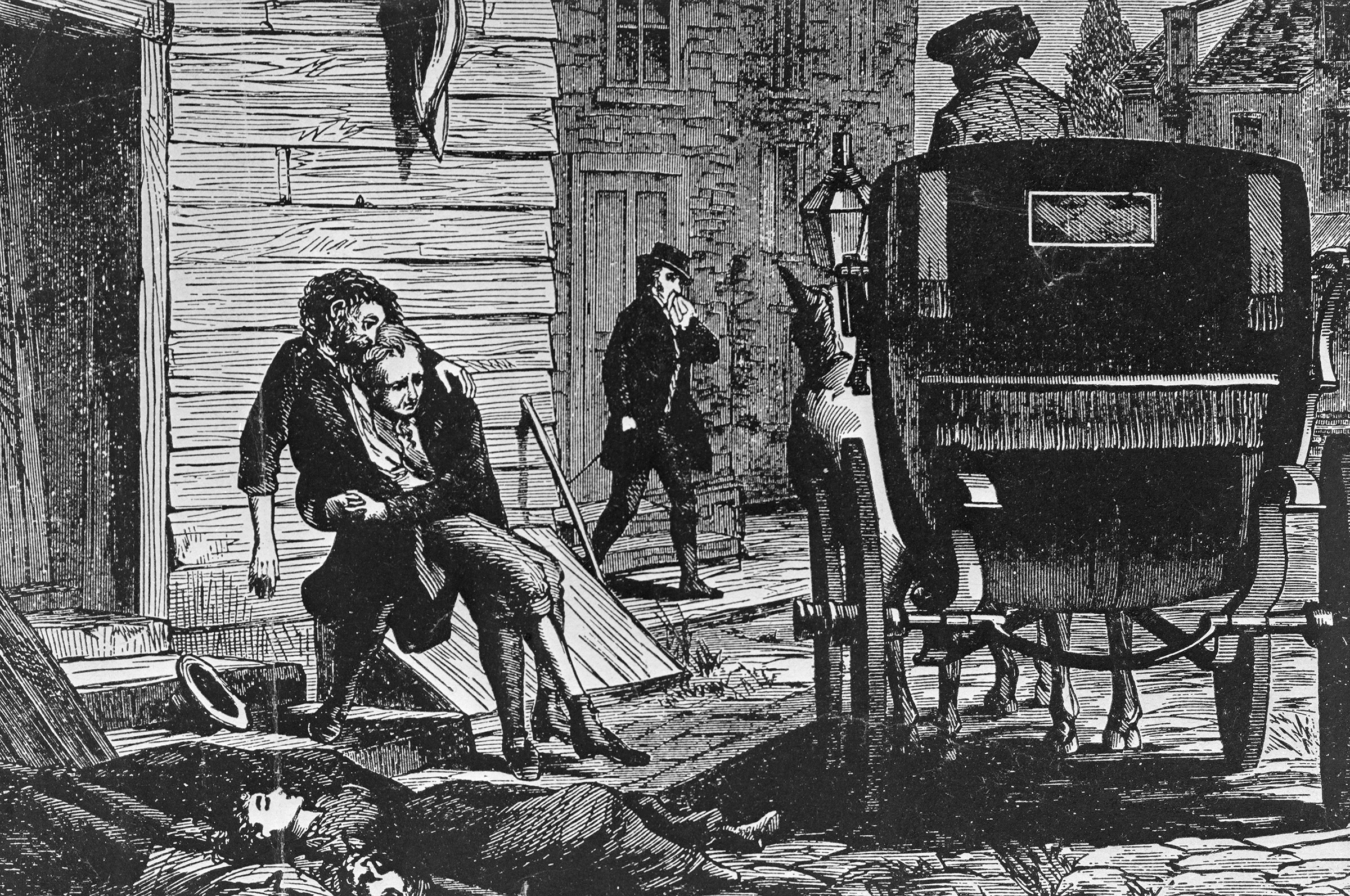 How Free Black People Helped Fight America's First Epidemic and Transformed the Nation's Capital. Essay at Time.com
Americans never saw it coming. Hardly anyone in Philadelphia, the nation’s temporary capital, noticed the first to die in the summer of 1793, a few weeks after the celebration of Independence Day: a few foreigners, an oyster seller in the waterfront slums. When more poor began to die, respectable people shrugged it off as a passing “putrid fever” brought on by rotted fish or perishables heaped on the docks. Then the young, healthy wife of a Baptist minister died, then at an ever-accelerating pace businessmen, ministers, magistrates, law officers, federal officials, men and women, the old and the young, masters and servants, the pious and the dissolute alike. It quickly became clear that no one was safe. Read More.
The American Congress and American Presidential History
- Boss Lincoln (2026): A superb, often surprising account that dispels the weary, "Lincoln as rube" stereotype once and for all. Essay in The Civil War Monitor By Fergus M. Bordewich 3/4/2026
- Madison and the Invention of Congress: Members of the first Federal Congress had to create a new government almost from scratch. Article in American Heritage.
- Congress Has Always Been Partisan and That's a Good Thing: "You Never Find Quiet Except Under a Tyranny." Even in the midst of all-out war, Lincoln recognized Congress as the primary repository of the people’s will, and he understood that the Founders never intended the president to be beyond the reach of its authority. Article in Time Magazine.
- Congress Fights the Civil War: America faced its greatest crisis in 1861 as the nation literally unraveled and the rest of the world wondered whether its experiment in self-determination would succeed. Article in American Heritage.
- Great Inauguration Moments: For two centuries, presidential inaugurations have provided transcendent moments that echo louder than the oath of office.
- Alexander Hamilton’s Capital Compromise: How a backroom deal placed the nation's capital on the Potomac
- A Capitol vision from a self-taught architect: The story of the West Indian abolitionist who designed the United States Capitol
- Full Circle: Inaugurating a New President in The City Built by Slaves
- The Rescue of Henry Clay: A long-lost painting of the Great Compromiser finds a new home in Washington
- Interview: Bordewich talks about the Lincoln Douglas debates
- The Great Dissenter: The rise and fall of Clement Vallandigham, the Democratic congressman who became the Lincoln administration’s most strident opponent. Essay in The Civil War Monitor By Fergus M. Bordewich 3/7/2020
American Civil Rights and the aftermath of the Civil War
- The Man Who Broke The Klan: How U.S. Army officer and Civil War veteran Lewis Merrill took on—and routed—the Ku Klux Klan in postwar South Carolina. Essay in The Civil War Monitor By Fergus M. Bordewich 3/18/2024
- An American Tragedy:
By 1898, North Carolina’s largest city was a thriving mixed-race community—and so a target of the state’s white supremacists. Review in The Wall Street Journal of Wilmington's Lie: The Murderous Coup Of 1898 And The Rise Of White Supremacy by David Zucchino
- The Cost of Conciliation:
President Andrew Johnson said death was ‘too easy a punishment’ for General Robert E. Lee. But by 1868 he had declared a full amnesty. Review in The Wall Street Journal of The Lost Indictment Of Robert E. Lee: The Forgotten Case Against An American Icon by John Reeves
- The Scourge of War, A Long March into Myth:
Sherman was an erudite, complicated man, far from the monster created by Southern apologists after the Civil War. Review in The Wall Street Journal of The Scourge Of War: The Life Of William Tecumseh Sherman by Brian Holden Reid
- The Real Gangs of New York: Martin Scorsese takes on the rough and tumble of antebellum NY
- Buried Treasure in a Cornfield: A Missouri family discovers a time-capsule of mid-19th century America
The Underground Railroad
- The Underground Railroad was no Fantasy: The often-mythologized network that helped slaves escape to the North was America's first interracial mass movement. Review at WSJ.com of the Amazon Prime Series "The Underground Railroad."
- The Underground Railroad on "the Essential Civil War Curriculum": Its political and moral importance both in antebellum America and as a forerunner of modern Civil Rights activism far outweighs its legendary romance.
- History's Tangled Threads: Faking the history of the Underground Railroad
- Interview: Bordewich on slavery and the Underground Railroad
Civil Rights and Women's Suffrage in the 20th Century
- Master of the Merry-Go-Round: The man behind every morning's must-read for the capital's movers and shakers: hated, admired, feared. Review at WSJ.com of Donald Ritchie's book "The Columnist," a biography of journalist Drew Pearson.
- Friends and Foes of the 19th Amendment: Rabble rousers, politicos and earnest reformers assembled in Nashville in the heat of July 1920 to decide the fate of women’s suffrage. Review in The Wall Street Journal of The Woman’s Hour by Elaine Weis
Early American History
- Walter Ralegh: Architect of Empire: Sir Walter Ralegh was a swashbuckling pirate, poet, colonizer and courtier who founded a doomed settlement. Review at The Wall Street Journal of Alan Gallay's book.
The U.S. Supreme Court and American Justice
- John Marshall, a Man 'Without Precedent': A lifelong Federalist, the Supreme Court chief justice served besides presidents who saw him as an enemy of their values. Review at The Wall Street Journal of Joel Richard Paul's book.
The American Civil War and Slavery
- How America’s Civil War Changed the World: How the last 150 years would have been different had the North not freed the slaves and saved the Union.
- The Survivor: Harlan Paige’s Civil War: The exceptional luck of a Vermont soldier on the long and bloody road to Appomattox. Essay in The Civil War Monitor By Fergus M. Bordewich 2/19/2026
- Back in the American Pantheon: The man who did so much for the antislavery cause was once regarded as a dangerous zealot. No more. Review in The Wall Street Journal of Thaddeus Stevens: Civil War Revolutionary By Bruce Levine
- Slavery in Jamaica: Anatomy of an Uprising:
Back-breaking labor, an oven-hot climate, whip-bearing overseers and a planter class eager to exploit slave labor. Jamaica exploded in rebellion—and the empire struck back. Review in The Wall Street Journal of three books on slavery in Jamaica.
- Snapshots That Changed Minds:
The sudden popularity of photography led abolitionists to cannily use images of light-skinned children born into slavery, like 7-year-old Mary Mildred Williams, to stoke outrage and gain sympathy for their cause. Review in The Wall Street Journal of three books on how photography helped end slavery.
- The Children of Manifest Destiny: Andrew Jackson drove a convoy of chained slaves. It was known as a ‘coffle.’ [article at WSJ]
- The Election That Saved the United States.
A victory for George McClellan in 1864 would have meant Southern independence and no emancipation of the slaves.
- Interview: Bordewich talks about John Brown's raid.
- Interview: Bordewich on the myth of "black Confederates"
- Civil War Veterans Come Alive: Library of Congress Audio and Video Recordings
Native American Issues
- Lost American Religion: An ecstatic religious uprising inspired hope in battered native tribes. It also led to the massacre at Wounded Knee. Review in The Wall Street Journal of God’s Red Son by Louis S. Warren
- The Least Transparent Industry in America: Abramoff Scandal Sheds Light on Indian Casinos
- How to succeed in business: Follow the Choctaws' lead
- No Reservations: Native American History
and Culture in Contemporary Art
Travel and the World beyond the United States
- The Search for Ancient Ithaca: A startling new theory may reveal the real home of Homer's Odysseus
- The Way of Confucius: In a remote corner of China travelers tread the path of the ancient sage
- The Ambush That Changed History: The discovery of a forgotten battle site reveals how 1st century A.D. Germans wiped out a Roman army
- A Monumental Struggle to Preserve Hagia Sophia: Muslims, Christians, and secularists claim the greatest surviving monument of Byzantium
- Winter Palace: Archaeology reveals new insights into the Incas' retreat of Machu Picchu
- Second Thoughts: Fergus M. Bordewich on Burmese Days
book REVIEWS
- Gateway to Freedom: by Eric Foner
- The Wars of Reconstruction
- The Gathering of the Waters: Old Man River
- A Mixed Blessing: Mrs. Mattingly's Miracle
- Tough Job, Wrong Man: Millard Fillmore
- Presidential Malpractice: Destiny of the Republic
- Delusions of the Master Class: Fatal Self-Deception
- The Price of Human Cargo: The Slave Ship
- The Many Facets of a Star-Spangled Symbol: Capture the Flag
- Trouble by the Spoonful: Sugar: A Bittersweet History
- Discovering the Real Robert E. Lee: Reading the Man
- The Meter Is Still Running: Taxi!
- A Violent Episode, Shameful Too: The Devil's Own Work
- Founding Portraitists: The Painter’s Chair: George Washington and the Making of American Art
- Mean Streets—Levittown: Two Families, One Tycoon, and the Fight for Civil Rights in America's Legendary Suburb
- The Political Value Of Table Talk: King of the Lobby
- Mightier than the Sword: Uncle Tom's Cabin
- Little Trouble in Big China Review of "Midnight in Peking"
WHAT CAN WE LEARN FROM AMERICA’S CENTENNIAL? Op/Ed at Time Magazine, April 2026
As we get ready to celebrate the 250th anniversary of the nation’s founding—in an America stressed by authoritarian overreach, economic anxiety, and partisan trench warfare—we might look back for a lesson or two to 1876, when the United States threw itself its most lavish birthday party, on its Centennial. Read More.
Republican tactics to suppress the Black vote echo those seen after the Civil War. Op/Ed at Inside Sources
The urgent lesson to be drawn from Reconstruction is that rights can be snatched away by partisan forces bent on eroding democracy. Passivity in the face of subversion is not a policy. Read More.
Fergus on why Biden's VP pick could change history. Op/Ed at Inside Sources
Some VPs have done well but others have been embarrassing failures, or worse. But historically, it is important, even urgent, for Americans to remember that vice presidents can and repeatedly since the 19th century have had a significant effect on our democracy. Read More.
How Free Black People Helped Fight America's First Epidemic and Transformed the Nation's Capital. Essay at Time.com
Americans never saw it coming. Hardly anyone in Philadelphia, the nation’s temporary capital, noticed the first to die in the summer of 1793, a few weeks after the celebration of Independence Day: a few foreigners, an oyster seller in the waterfront slums. When more poor began to die, respectable people shrugged it off as a passing “putrid fever” brought on by rotted fish or perishables heaped on the docks. Then the young, healthy wife of a Baptist minister died, then at an ever-accelerating pace businessmen, ministers, magistrates, law officers, federal officials, men and women, the old and the young, masters and servants, the pious and the dissolute alike. It quickly became clear that no one was safe. Read More.
American Civil Rights and the aftermath of the Civil War
- The Man Who Broke The Klan: How U.S. Army officer and Civil War veteran Lewis Merrill took on—and routed—the Ku Klux Klan in postwar South Carolina. Essay in The Civil War Monitor By Fergus M. Bordewich 3/18/2024
- An American Tragedy: By 1898, North Carolina’s largest city was a thriving mixed-race community—and so a target of the state’s white supremacists. Review in The Wall Street Journal of Wilmington's Lie: The Murderous Coup Of 1898 And The Rise Of White Supremacy by David Zucchino
- The Cost of Conciliation: President Andrew Johnson said death was ‘too easy a punishment’ for General Robert E. Lee. But by 1868 he had declared a full amnesty. Review in The Wall Street Journal of The Lost Indictment Of Robert E. Lee: The Forgotten Case Against An American Icon by John Reeves
- The Scourge of War, A Long March into Myth: Sherman was an erudite, complicated man, far from the monster created by Southern apologists after the Civil War. Review in The Wall Street Journal of The Scourge Of War: The Life Of William Tecumseh Sherman by Brian Holden Reid
- The Real Gangs of New York: Martin Scorsese takes on the rough and tumble of antebellum NY
- Buried Treasure in a Cornfield: A Missouri family discovers a time-capsule of mid-19th century America
The Underground Railroad
- The Underground Railroad was no Fantasy: The often-mythologized network that helped slaves escape to the North was America's first interracial mass movement. Review at WSJ.com of the Amazon Prime Series "The Underground Railroad."
- The Underground Railroad on "the Essential Civil War Curriculum": Its political and moral importance both in antebellum America and as a forerunner of modern Civil Rights activism far outweighs its legendary romance.
- History's Tangled Threads: Faking the history of the Underground Railroad
- Interview: Bordewich on slavery and the Underground Railroad
Civil Rights and Women's Suffrage in the 20th Century
- Master of the Merry-Go-Round: The man behind every morning's must-read for the capital's movers and shakers: hated, admired, feared. Review at WSJ.com of Donald Ritchie's book "The Columnist," a biography of journalist Drew Pearson.
- Friends and Foes of the 19th Amendment: Rabble rousers, politicos and earnest reformers assembled in Nashville in the heat of July 1920 to decide the fate of women’s suffrage. Review in The Wall Street Journal of The Woman’s Hour by Elaine Weis
Early American History
- Walter Ralegh: Architect of Empire: Sir Walter Ralegh was a swashbuckling pirate, poet, colonizer and courtier who founded a doomed settlement. Review at The Wall Street Journal of Alan Gallay's book.
The U.S. Supreme Court and American Justice
- John Marshall, a Man 'Without Precedent': A lifelong Federalist, the Supreme Court chief justice served besides presidents who saw him as an enemy of their values. Review at The Wall Street Journal of Joel Richard Paul's book.
The American Civil War and Slavery
- How America’s Civil War Changed the World: How the last 150 years would have been different had the North not freed the slaves and saved the Union.
- The Survivor: Harlan Paige’s Civil War: The exceptional luck of a Vermont soldier on the long and bloody road to Appomattox. Essay in The Civil War Monitor By Fergus M. Bordewich 2/19/2026
- Back in the American Pantheon: The man who did so much for the antislavery cause was once regarded as a dangerous zealot. No more. Review in The Wall Street Journal of Thaddeus Stevens: Civil War Revolutionary By Bruce Levine
- Slavery in Jamaica: Anatomy of an Uprising: Back-breaking labor, an oven-hot climate, whip-bearing overseers and a planter class eager to exploit slave labor. Jamaica exploded in rebellion—and the empire struck back. Review in The Wall Street Journal of three books on slavery in Jamaica.
- Snapshots That Changed Minds: The sudden popularity of photography led abolitionists to cannily use images of light-skinned children born into slavery, like 7-year-old Mary Mildred Williams, to stoke outrage and gain sympathy for their cause. Review in The Wall Street Journal of three books on how photography helped end slavery.
- The Children of Manifest Destiny: Andrew Jackson drove a convoy of chained slaves. It was known as a ‘coffle.’ [article at WSJ]
- The Election That Saved the United States. A victory for George McClellan in 1864 would have meant Southern independence and no emancipation of the slaves.
- Interview: Bordewich talks about John Brown's raid.
- Interview: Bordewich on the myth of "black Confederates"
- Civil War Veterans Come Alive: Library of Congress Audio and Video Recordings
Native American Issues
- Lost American Religion: An ecstatic religious uprising inspired hope in battered native tribes. It also led to the massacre at Wounded Knee. Review in The Wall Street Journal of God’s Red Son by Louis S. Warren
- The Least Transparent Industry in America: Abramoff Scandal Sheds Light on Indian Casinos
- How to succeed in business: Follow the Choctaws' lead
- No Reservations: Native American History and Culture in Contemporary Art
Travel and the World beyond the United States
- The Search for Ancient Ithaca: A startling new theory may reveal the real home of Homer's Odysseus
- The Way of Confucius: In a remote corner of China travelers tread the path of the ancient sage
- The Ambush That Changed History: The discovery of a forgotten battle site reveals how 1st century A.D. Germans wiped out a Roman army
- A Monumental Struggle to Preserve Hagia Sophia: Muslims, Christians, and secularists claim the greatest surviving monument of Byzantium
- Winter Palace: Archaeology reveals new insights into the Incas' retreat of Machu Picchu
- Second Thoughts: Fergus M. Bordewich on Burmese Days
book REVIEWS
- Gateway to Freedom: by Eric Foner
- The Wars of Reconstruction
- The Gathering of the Waters: Old Man River
- A Mixed Blessing: Mrs. Mattingly's Miracle
- Tough Job, Wrong Man: Millard Fillmore
- Presidential Malpractice: Destiny of the Republic
- Delusions of the Master Class: Fatal Self-Deception
- The Price of Human Cargo: The Slave Ship
- The Many Facets of a Star-Spangled Symbol: Capture the Flag
- Trouble by the Spoonful: Sugar: A Bittersweet History
- Discovering the Real Robert E. Lee: Reading the Man
- The Meter Is Still Running: Taxi!
- A Violent Episode, Shameful Too: The Devil's Own Work
- Founding Portraitists: The Painter’s Chair: George Washington and the Making of American Art
- Mean Streets—Levittown: Two Families, One Tycoon, and the Fight for Civil Rights in America's Legendary Suburb
- The Political Value Of Table Talk: King of the Lobby
- Mightier than the Sword: Uncle Tom's Cabin
- Little Trouble in Big China Review of "Midnight in Peking"